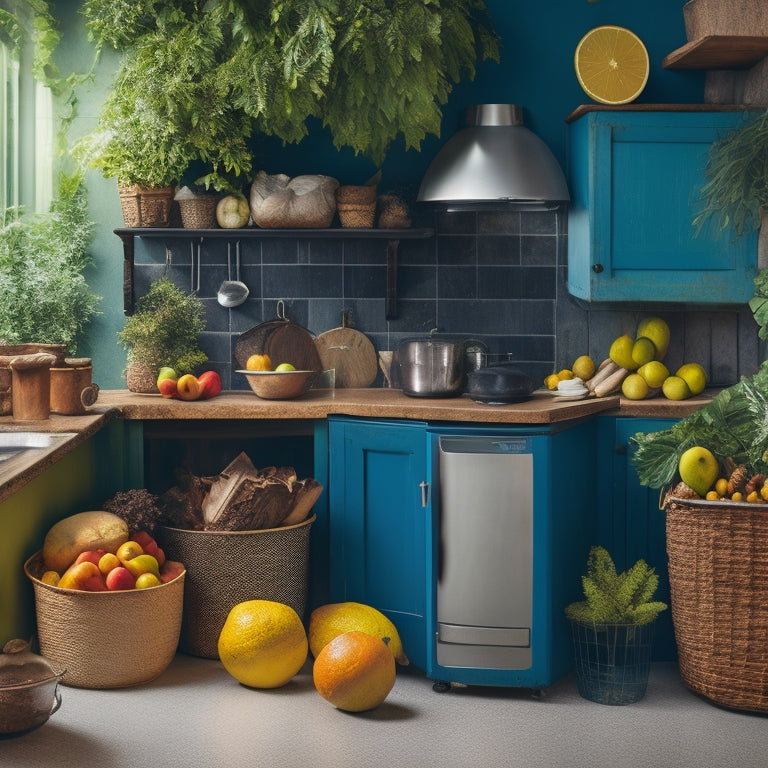
Slash Food Waste: Easy Home Tips
Slash food waste at home with these easy tips. Start by planning your grocery shopping with a meal plan and list to avoid buying too much. Optimize your food storage by organizing your pantry, fridge, and freezer to keep food fresh longer. Get creative with leftovers by reviving wilted greens, repurposing scraps, and transforming them into new dishes. Manage food waste by sharing surplus food, freezing leftovers, and implementing DIY composting. By adopting these habits, you'll not only save money but also reduce your environmental impact and make a difference in your community. Now, take the next step to making a positive change.
Key Takeaways
• Create a meal plan and list to avoid buying unnecessary items and reduce food waste at home.
• Check your pantry, fridge, and freezer before shopping to avoid duplicate purchases and ensure you use up existing items.
• Store food properly to extend shelf life, and freeze items when possible to keep them fresh for longer.
• Get creative with leftovers by repurposing them into new dishes or using them in recipes to reduce food waste.
• Implement DIY composting to turn food scraps into nutrient-rich soil for your garden, reducing waste sent to landfills.
Plan Your Grocery Shopping
Before you head to the store, take 10 minutes to plan your grocery shopping by creating a meal plan and list to avoid purchasing too much or too little of anything. This simple step will help you save money and reduce waste.
Take stock of what you already have in your pantry, fridge, and freezer to make sure you don't duplicate purchases. Consider meal prep options that use similar ingredients to minimize leftovers. A well-arranged pantry will also help you identify what you need to replenish.
Optimize Your Food Storage
You can greatly extend the shelf life of your groceries by storing them properly, and it all starts with organizing your pantry, fridge, and freezer.
Store delicate fresh produce like greens and herbs wrapped in a damp cloth in the fridge to keep them fresh. Freeze foods like bread, meats, and produce to extend their freshness.
Portion foods in smaller containers for easier cooking and use the first-in, first-out rule for pantry organization.
Consider leftover solutions like freezing leftovers in individual portions or using them in creative recipes. Keep a list of items to eat up or share before they spoil, and you'll be well on your way to optimizing your food storage and reducing waste.
Reduce Food Waste Creatively
Reviving wilted greens, repurposing leftovers, and transforming scraps into something new are just a few creative ways to reduce food waste and get the most out of your groceries. You can get creative by turning last night's dinner into tomorrow's lunch or using up ripe fruit in a smoothie. Here are some ideas to get you started:
| Food Item | Creative Use | Benefits |
|---|---|---|
| Wilted Greens | Soak in ice-cold water to revive | Fresh salad or sautéed side dish |
| Leftover Veggies | Add to soups, stews, or smoothies | Nutritious and filling meal |
| Ripe Fruit | Blend into smoothies or make a fruit salad | Healthy snack or dessert |
| Stale Bread | Make croutons or breadcrumbs | Crunchy topping for salads or soups |
| Food Scraps | Use in homemade soup stock or compost | Reduce waste and create nutrient-rich soil |
Manage Food Waste at Home
To effectively manage food waste at home, start by implementing a few simple habits into your daily routine. Begin by sharing surplus food with friends, family, or neighbors who might appreciate it.
You can also use up leftovers creatively or freeze them for later. Another great way to manage food waste is through DIY composting. Set up a compost bin or pile in your backyard or even on your balcony, and add food scraps, tea bags, and coffee grounds.
This will reduce the amount of waste sent to landfills and create nutrient-rich soil for your garden. By making these small changes, you'll be well on your way to reducing food waste at home.
Dispose of Food Waste Wisely
One effective way to dispose of food waste wisely is to donate packaged, shelf-stable foods to local food banks or shelters, ensuring they reach those who need them most. This act of food donation not only reduces waste but also supports your community.
For food scraps that can't be donated, consider using your in-sink garbage disposal. Remember to only grind spoiled foods and scraps, avoiding hard items, grease, or fat that can clog your pipes. By doing so, you'll help turn processed food waste into energy and compost at treatment facilities.
Frequently Asked Questions
Can I Freeze Cooked Meals for Later Use?
"Let's be real, you're probably tired of eating the same old leftovers for days. Good news: yes, you can freeze cooked meals for later use! Freezing benefits include preserving nutrients and saving time with meal prep, so go ahead and freeze those meals for a quick lunch or dinner later."
How Long Do Meal Plans Typically Last Before Needing Revision?
You typically revise your meal plan every 1-2 weeks as your kitchen inventory and rotation change, ensuring you're using up what you have and avoiding waste, while also incorporating meal prep and organization to maximize efficiency.
Are There Any Apps to Help Track Food Waste and Expenses?
You can harness the power of technology to curb food waste and expenses by using apps like StillTasty, FreshBox, or Foodkeeper, which aid in food inventory and budget tracking, while also highlighting donation opportunities and community resources.
Can I Compost Food Waste in a Small Apartment?
You can compost food waste in a small apartment by using indoor composting methods, like vermicomposting or bokashi, which reduce food scraps and are perfect for urban living in tight spaces.
Are There Any Local Food Waste Reduction Initiatives in My Area?
You can find local food waste reduction initiatives in your area by searching online for community gardens, composting programs, or food rescue organizations near you, and get involved to make a positive impact.
Related Posts
-
Mastering Kitchen Organization: 7 Expert Tips Inside
You're just a few simple strategies away from transforming your kitchen into a highly functional and efficient space ...
-
Simplify Meal Planning for Busy Professionals in 5
You're about to revolutionize your meal planning routine! Start by setting clear goals, identifying your dietary pref...
